Slow, insecure photo delivery quietly loses photographers repeat business. USB drives get lost, public Drive links leak private images, and clients wait weeks while automated photo delivery to clients gets galleries into their hands in minutes.
Photo delivery problems are one of the most overlooked threats in the photography industry. You can capture incredible images, edit beautifully, and still lose client trust because of how you deliver the final photos. Most clients don’t understand RAW files, folder structures, or export settings. They judge you on one simple outcome: “Did I get my photos quickly, safely, and easily?”
And that’s where traditional delivery workflows quietly break businesses. A delivery link expires. A USB gets lost. A shared folder shows the wrong images. A client can’t find their photos and messages you repeatedly. None of these feel like huge disasters in the moment but over time they cost you hours, reduce referrals, and weaken your brand.
If you’re a wedding photographer, you’ve probably heard: “Can you send me only the photos I’m in?” If you shoot schools or sports, you’ve heard: “Why can everyone see my child’s pictures?” If you cover corporate events, you’ve heard: “We need a professional portal, not a public drive link.” These aren’t edge cases anymore. They are the new normal.
The Real Cost of Traditional Photo Delivery (It’s Not Just Time)
Traditional delivery methods usually look like this: export photos, make folders, upload to Drive/Dropbox/WeTransfer, share a link, and hope the client figures it out. Sometimes it works. But when it fails, it fails in ways that hurt your business silently.
- Hidden admin hours: The time you spend answering delivery questions isn’t “support” it’s unpaid labor.
- Lower client confidence: A messy delivery experience makes clients assume your process is messy even if your photos are great.
- Fewer referrals: People share and recommend photographers when the experience is smooth and fast.
- Revenue leakage: Slow or confusing delivery reduces print orders, upsells, and repeat bookings.
- More risk: Public links and shared folders increase privacy complaints especially for children and families.
The Most Common Photo Delivery Problems (And Why They Keep Happening)
Let’s break down the biggest delivery issues photographers face today. You may recognize several immediately.
1) “I can’t find my photos.”
This is the #1 complaint in event photography. When you deliver a large folder, clients must scroll through hundreds (or thousands) of images to find themselves. Guests at weddings and festivals often give up. And once they give up, they stop sharing and you lose the free marketing that comes from happy people posting your work.
2) Links expire, downloads fail, and files disappear
Time-limited transfer links, storage limits, and “download quota exceeded” errors create panic for clients. Even worse: the client assumes it’s your fault. When your delivery system is unreliable, your business feels unreliable.
3) Privacy complaints (especially for families, schools, and women)
Privacy expectations have changed dramatically. A public gallery link that anyone can access is not acceptable in many contexts. Schools, families, and corporate clients increasingly require secure photo delivery and controlled access. If you photograph children, privacy is not a feature it’s a baseline requirement.
4) WhatsApp delivery destroys quality (and control)
Many photographers still deliver previews via chat apps because it’s “quick.” But chat apps compress images, mix media, and make it hard to organize. Your photos lose quality, your branding disappears, and the client experience feels informal even if your service is premium.
5) Endless follow-ups (the death by a thousand messages)
After a big event, one shared link can generate 50+ messages: “Where’s mine?” “Send me the couple shot.” “Can you make an album for my family?” Each request feels small, but collectively they steal your time and delay your next job. This is exactly why scaling photographers look for workflow automation.
⚠️ The quiet killer
Traditional delivery doesn’t usually fail all at once. It fails slowly through small friction points that reduce trust, reduce sharing, and reduce repeat bookings.
The Waiting Game Is Costing You More Than Time
Event photos have a shelf life. The longer delivery takes, the less valuable those photos become. Industry Insight
Clients are most excited right after the event. That excitement drives sharing, referrals, and additional purchases. When delivery takes too long, the moment is gone. Guests stop checking. Couples move on. Parents lose interest. And the photos that could have marketed your work for free get buried in camera rolls.
Fast delivery isn’t just operational efficiency it’s growth strategy. If you deliver quickly and professionally, clients share quickly and professionally. That leads to more inquiries, more bookings, and stronger brand reputation.
Privacy Is No Longer Optional
For a long time, photographers treated privacy as something only “high-end clients” cared about. That era is over. In 2026, privacy is a mainstream expectation. Parents, schools, corporate organizers, and many families want clear control over who can see their images.
Even if you are not personally handling legal compliance, privacy mistakes can damage your reputation instantly. A single complaint can spread in community groups, school circles, or corporate networks. That’s why secure photo delivery and permission-based access is becoming standard.
- Security: Unauthorized access destroys trust and can lead to complaints.
- Speed: Manual workflows delay delivery and reduce client satisfaction.
- Revenue: Slower delivery reduces purchases, upsells, and re-bookings.
What a Modern Photo Delivery System Should Do
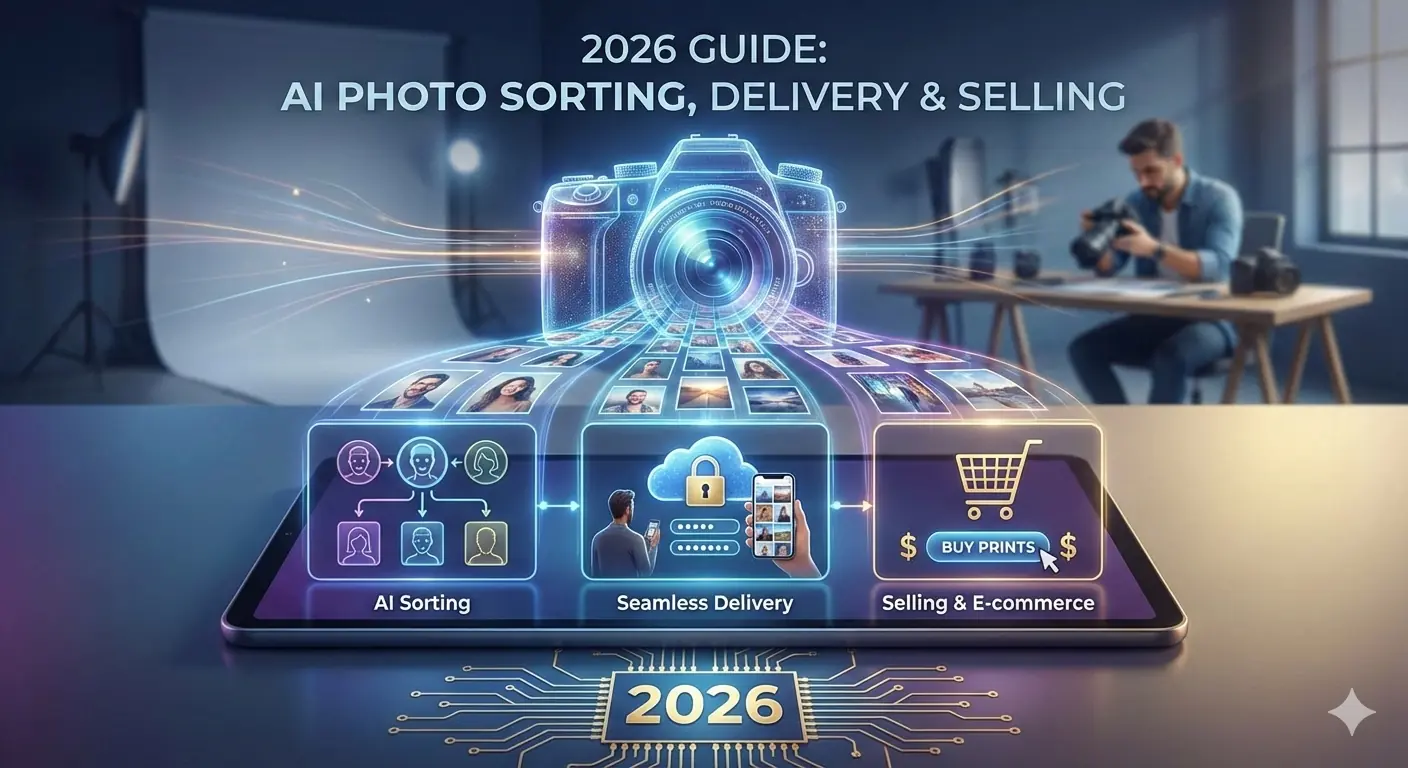
If traditional methods are failing, what replaces them? The modern standard is a photographer client portal combined with AI photo sorting software. That means clients don’t receive a giant folder they receive a clean experience where they instantly find their photos, download easily, and stay within a secure environment.
- ✓Help people find their photos instantly (without scrolling endlessly).
- ✓Support secure photo delivery with access control and privacy safeguards.
- ✓Work beautifully on mobile (most guests will view on phones).
- ✓Enable fast sharing while maintaining quality and branding.
- ✓Reduce follow-up messages by making the portal self-serve.
The Solution Is Automation and AI (Without Adding Complexity)
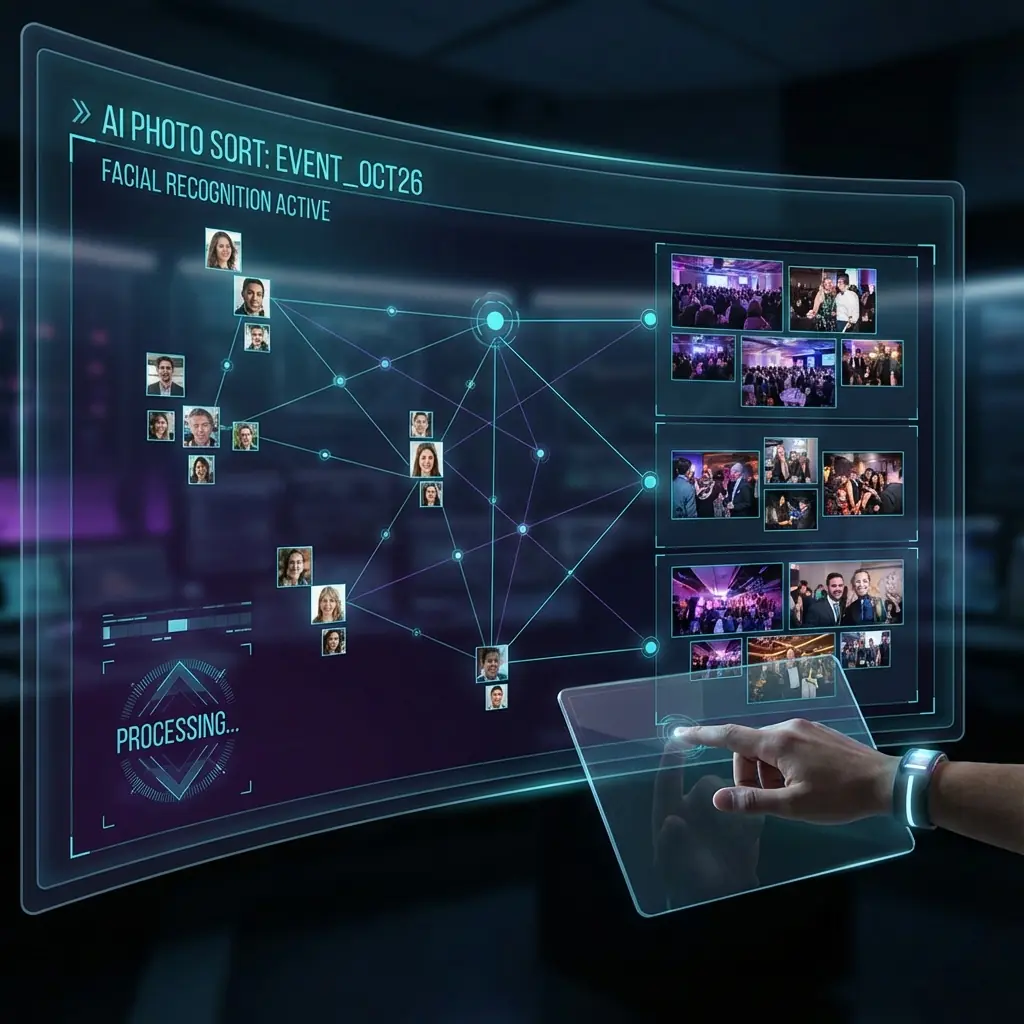
The best workflow upgrades are the ones that remove work not add it. Modern solutions use AI to handle the most painful part of delivery: organizing images so clients can locate themselves. Instead of asking clients to dig through folders, AI photo sorting software groups images by person, making delivery personal and effortless.
This is where face recognition photo organizers change the game. When images are grouped by face, each guest can instantly access the photos that include them. Combine that with secure access and a branded portal, and you create a delivery experience that feels premium even at scale.
A simple example
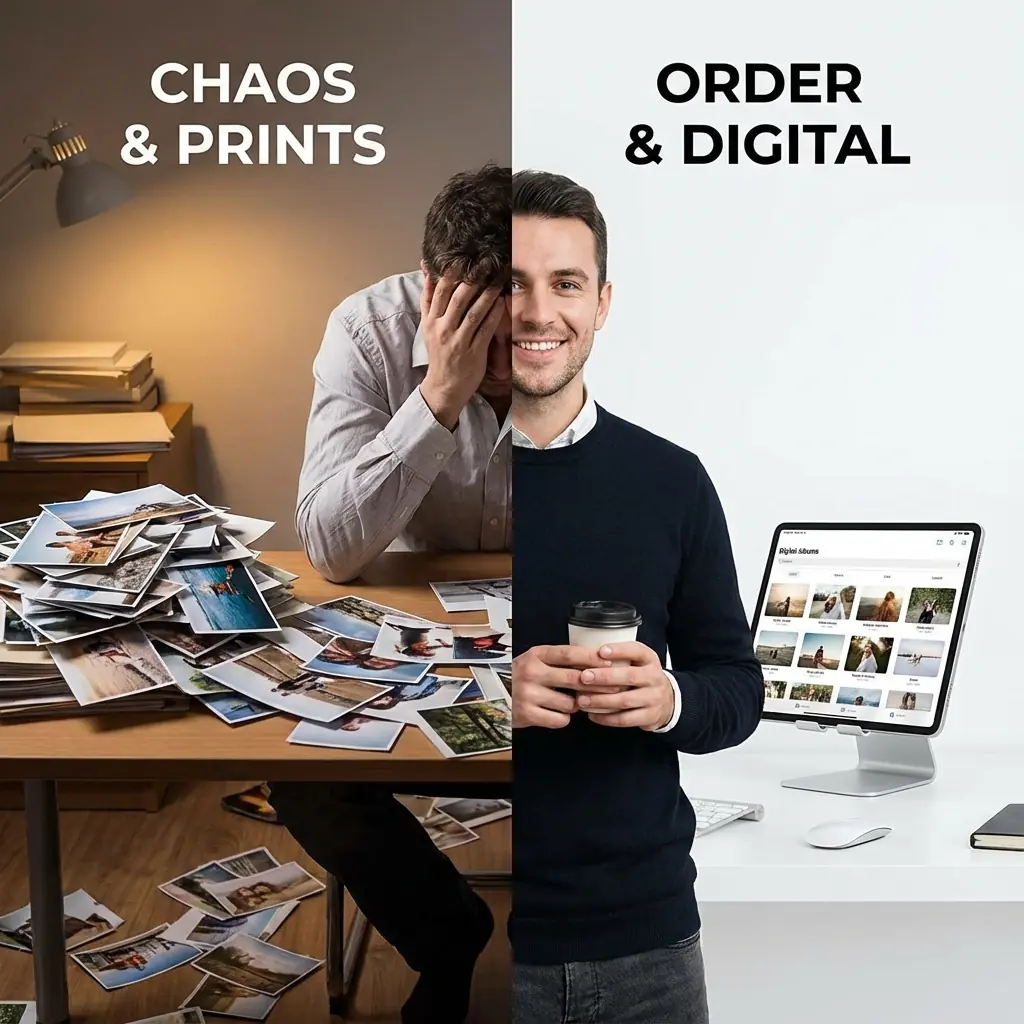
Traditional: You upload 2,000 photos → share one link → guests scroll → guests message you → you waste hours. Modern: You upload photos → AI sorts by face → guests open a link → they immediately see their images → fewer messages, faster sharing, better referrals.
💡 Pro Tip: Design delivery for the client, not for your storage
Folders and filenames are for computers. Clients want “my photos.” Build a workflow that delivers results the way humans naturally look for them: by face, moment, and relevance.
FAQ: Fixing Photo Delivery Problems
What is the best way to send photos to clients online?
A secure client portal is typically the best approach. It keeps delivery organized, protects privacy, works on mobile, and reduces follow-up messages.
How do I avoid privacy issues when sharing event photos?
Avoid public links and shared folders. Use secure photo delivery that limits access and prevents unrelated guests from viewing each other’s images.
How can I reduce delivery-related client messages?
Make delivery self-serve: organized galleries, easy downloads, clear instructions, and (when possible) face-based grouping so guests instantly find their photos.
Conclusion: Delivery Is Part of Your Product
Photography isn’t just about taking great images it’s also about delivering them in a way that feels fast, secure, and professional. Traditional delivery methods create friction, privacy problems, and lost revenue. They also make you work harder than necessary.
If you want to grow your photography business in 2026, treat delivery as a core part of the experience. When clients can instantly find their photos, access them safely, and share them while excitement is high, your work spreads further and your business grows faster.