To price event photography profitably in 2026, factor in hidden costs like sorting and delivery time and charge for speed. This guide shows how to build packages that protect your margins while AI handles the workflow.
The most common question in every photography Facebook group is: "How much should I charge for this event?" The answers are usually all over the map from "$50/hour" to "$5,000 flat fee."
Pricing is the hardest part of the photography business because it requires you to value your time, your gear, and your expertise accurately. But in 2026, there is a new variable in the equation: Speed.
In this guide, we’ll break down why most photographers are undercharging, how to calculate your real hourly rate, and how to structure packages that maximize profit while wowing clients.
The 'Hidden Cost' That Kills Profitability
Most new photographers make a fatal mistake: they only charge for shooting time. They think, "If I charge $200/hour for a 5-hour event, I make $1,000. That’s great money!"
But they forget the Post-Production Tax. For a 5-hour event, you might shoot 2,500 photos. You then spend:
- 2 Hours: Ingesting & Backing up
- 5 Hours: sorting (Selection)
- 3 Hours: Editing/Color Grading
- 1 Hour: Exporting & Uploading
Your 5-hour job is actually a 16-hour job. That $1,000 fee divides down to $62/hour. After taxes, insurance, and gear depreciation, you might be making less than minimum wage.
⚠️ The Lesson
Your pricing MUST cover the post-production hours. Or, you must use automation to eliminate them.
The 3 Standard Pricing Models
1. Hourly Rate (The Trap)
Charging strictly by the hour often punishes efficiency. Clients will try to squeeze you ("Can we just do 3 hours instead of 4?") and expect unlimited photos. Use this only for small, low-stakes gigs.
2. Per-Image Pricing (The Sales Model)
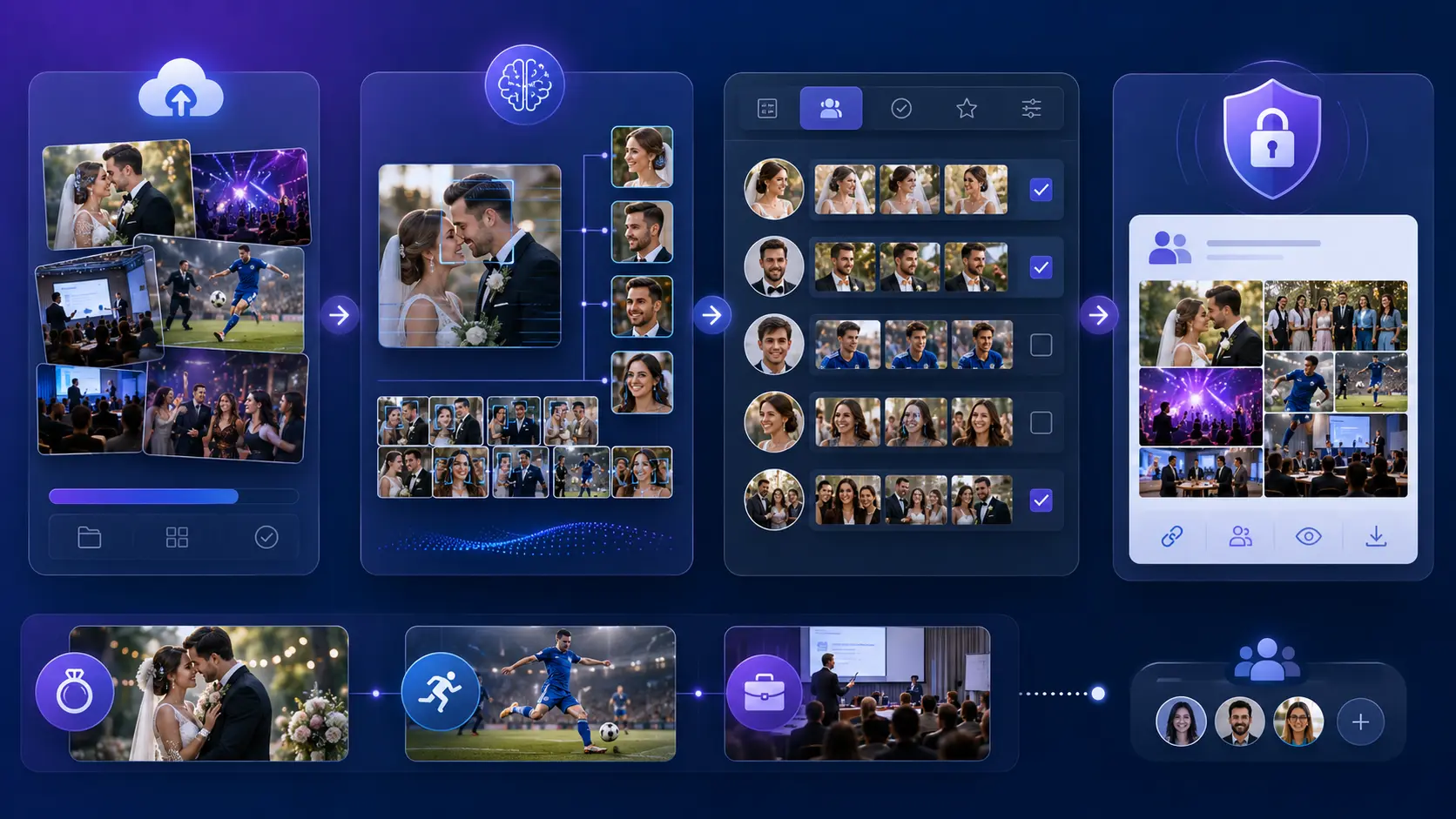
You charge a low 'Sitting Fee' (e.g., $300) to show up, but the client pays per photo download (e.g., $10/image). This works incredibly well for marathons, headshots, or galas where attendees buy their own photos. Tools like Lenzeit make this model scalable by automating the sorting and delivery.
3. The Package Model (The Profit King)
This is the gold standard for corporate events and weddings. You bundle value rather than hours. It shifts the conversation from "How long will you be here?" to "What will I get?"
Structuring Profitable Packages in 2026
Here is a blueprint for a tiered pricing strategy that leverages speed as a premium feature.
🥉 The Standard Package (Good)
- ✓Coverage: 4 Hours
- ✓Delivery: 3 Weeks
- ✓Deliverables: 300 Edited Photos (Web Resolution)
- ✓Price: $1,500
This is your baseline. It covers your time and manual editing effort.
🥈 The Professional Package (Better)
- ✓Coverage: 8 Hours
- ✓Delivery: 1 Week
- ✓Deliverables: 600 Edited Photos (High & Web Res)
- ✓Bonus: Private Online Gallery
- ✓Price: $3,200
🥇 The 'Instant Impact' Package (Best)
This is where you make the real money. By using AI tools, you offer something most competitors can't: Speed.
- ✓Coverage: All Day (Up to 10 Hours)
- ✓Delivery: Same-Day or Next-Morning
- ✓Deliverables: Unlimited Photos (AI Culled)
- ✓Bonus: Face Search for Guests (VIP Experience)
- ✓Price: $5,500+
✅ Why This Works
Corporate clients possess marketing budgets. They NEED photos instantly for social media. They will happily pay an extra $2,000 for 'Same-Day Delivery' because it helps them do their job. With Lenzeit, this 'premium' service costs you zero extra effort the AI does the rush work while you sleep.
How to Raise Your Prices Today
Start by auditing your last 3 jobs. Calculate your actual hours worked (shoot + edit). If your hourly rate is below $100, you need to change your workflow.
Invest in tools that eliminate the bottleneck. If you can cut 10 hours of sorting time per event using AI, you have instantly given yourself a raise. You can use that saved time to market your business, find better clients, or simply enjoy your life.